


SukhoThai Blogs
Unlock insights with our recent articles

 Jun 2026
International Yoga Day: Why Flexibility, Mobility and Recovery Matter More Than Ever
It happens to almost everyone the same way.
You wake up, reach for your phone before your feet even touch the floor, and by the time you've answered three messages, the day has already started without you. You sit down for "just an hour" of work. Then it's three. Then it's seven, broken only by a short walk to refill your coffee.
By evening, your neck feels tight. Your lower back has a dull ache you've started to consider normal. Your shoulders sit slightly hunched, even when you're not at your desk. You tell yourself you'll stretch later. Later rarely comes.
This is not a personal failing. It is simply what modern life does to the body.
And it's exactly why International Yoga Day has grown into something far bigger than a single observance on the calendar. It has become an annual reminder for entire countries, workplaces, and individuals that the body keeps score, and that flexibility, mobility, and recovery are no longer optional extras. They are the foundation of how well we live.
This year, that reminder feels more relevant than ever.
What International Yoga Day Means Today
International Yoga Day is observed every year on June 21, the summer solstice and longest day of the year in the Northern Hemisphere a date the global yoga tradition has long treated as symbolically significant. The United Nations officially recognised the day in 2014, and the first celebration took place in 2015. Today, it is marked in more than 190 countries, with millions of people joining group sessions, community classes, and quiet personal practices at home.
What started as a celebration of an ancient Indian discipline has evolved into something more universal: a global checkpoint for wellness itself.
Each year's theme reflects what the world collectively needs most. Recent themes have centred on holistic health, planetary wellbeing, and most tellingly — healthy ageing and longevity, recognising that yoga isn't just about how flexible you are on a mat. It's about how well your body and mind function for decades to come.
This shift matters. It signals a broader cultural awakening: people are no longer chasing wellness as a trend. They're pursuing it as a long-term investment in how they move, sleep, think, and feel at every stage of life.
For brands and individuals alike, growing wellness awareness has turned International Yoga Day into more than a celebration of a practice. It's a prompt to pause and ask: when did I last actually take care of my body, not just push it through another day?
Why Modern Lifestyles Are Making Our Bodies Stiffer
Stiffness rarely arrives all at once. It accumulates quietly, almost invisibly through habits that feel completely ordinary.
Sitting for Long Hours
The average desk-based professional now spends the majority of their waking hours seated commuting, working, eating, unwinding in front of a screen. Hip flexors shorten. Hamstrings tighten. The spine, designed to move through a full range of motion, instead holds one position for hours at a stretch.
Mobile and Screen Usage
"Tech neck" is no longer a niche term. Constant downward gazing at phones places significant extra load on the cervical spine, gradually altering posture and tightening the muscles across the neck and upper back.
Work Stress
Mental tension doesn't stay mental. Chronic work stress shows up physically clenched jaws, raised shoulders, shallow breathing patterns the body holds onto long after the stressful moment has passed.
Lack of Movement Variety
Even people who exercise regularly often move in narrow, repetitive patterns: the same gym routine, the same commute, the same seated posture. The body craves variety rotation, extension, multi-directional movement and without it, certain muscles overwork while others quietly weaken.
The result is a body that feels older than it should: tight hips, a stiff back, restricted shoulders, and a nervous system that rarely gets the chance to fully exhale.
This is precisely the gap that yoga and intentional recovery is built to close.
Understanding Flexibility vs Mobility
These two words get used interchangeably, but they describe genuinely different things and understanding the distinction matters for how you train, stretch, and recover.
Flexibility is the passive ability of a muscle to lengthen how far a muscle or muscle group can stretch, typically with help from gravity, a strap, or another person. Think of touching your toes while someone gently assists the stretch.
Mobility is the active ability of a joint to move through its full range of motion under your own control, with strength and stability. It's not just about how far you can stretch it's about how well you can move, unaided, through that range while staying balanced and supported.
A simple way to picture it: flexibility is the size of the doorway; mobility is your ability to walk through it confidently, carrying something, without losing your balance.
Why both matter:
-
Flexibility without mobility can leave joints loose but unstable, which raises injury risk.
-
Mobility without flexibility can leave the body strong but restricted, often showing up as stiffness even in people who train regularly.
-
Together, they create functional movement the kind that lets you bend, twist, reach, and recover from daily strain without your body fighting you at every turn.
This is exactly why traditional stretching alone isn't enough, and why pure strength training alone isn't enough either. The body needs both qualities working in harmony which is precisely what a well-rounded yoga practice is designed to build.
How Yoga Improves Flexibility Naturally
Yoga doesn't force the body into flexibility. It invites it there, gradually, through repetition, breath, and patience.
Stretching With Intention
Unlike a quick, mechanical stretch before a workout, yoga poses are held often for several breaths at a time. This sustained holding allows muscle fibres to lengthen safely, rather than being forced past their comfortable range. Over weeks and months, this consistent practice is how yoga for flexibility produces real, lasting change rather than a temporary loosening.
Supporting Muscle Health
Tight, under-stretched muscles are more prone to strain. Regular yoga practice improves circulation to muscle tissue, helping reduce stiffness and supporting the kind of muscle health that protects against everyday injury the kind that happens not in a gym, but while reaching for a top shelf or bending to tie a shoe.
Encouraging Full Joint Movement
Many common poses from gentle twists to deep hip openers deliberately move joints through ranges they rarely experience during a typical desk-bound day. This is where yoga for mobility becomes just as important as flexibility work: it teaches joints to move confidently, not just stretch passively.
The combined effect is a body that feels lighter, looser, and more capable not because it was pushed harder, but because it was given the consistent, gentle attention it had been missing.
Why Recovery Is Essential in 2026
If flexibility and mobility are about how the body moves, recovery is about how the body repairs and in 2026, that repair process has never been more necessary.
Burnout Has Become the Norm, Not the Exception
Always-on work culture, constant notifications, and blurred lines between "on" and "off" hours have made low-grade burnout almost universal. The body absorbs this long before the mind admits it.
Chronic Stress Is a Physical Condition, Not Just a Mental One
Sustained stress keeps the nervous system in a heightened state, which can affect sleep quality, digestion, immunity, and muscular tension. Stress relief isn't a luxury in this context it's a physiological necessity.
Muscle Fatigue Accumulates Silently
Even without intense exercise, poor posture and repetitive strain create a quiet, ongoing fatigue in muscles that rarely get to fully release.
Mental Exhaustion Compounds Everything
A tired mind makes a tired body feel heavier. The two are not separate systems they are deeply, constantly linked.
This is why muscle recovery and mental recovery now have to be considered together, not as separate categories of wellness, but as one continuous process of restoration. The old idea that recovery only matters for athletes after intense training no longer holds. In 2026, recovery matters for anyone living a modern, screen-heavy, high-pressure life which, increasingly, is everyone.
The Connection Between Yoga, Recovery and Wellness Therapies
Yoga and recovery are natural partners both work with the body's own systems rather than against them.
A consistent yoga practice activates the parasympathetic nervous system the body's "rest and digest" state which directly supports better sleep, slower heart rate, and reduced cortisol levels. This is the same physiological state that wellness therapies like massage, thermal treatments, and guided relaxation aim to create.
When yoga and recovery are practised together, the benefits compound:
-
Yoga loosens and lengthens muscles; therapeutic bodywork helps release deeper tension held within them.
-
Breathwork calms the nervous system; recovery treatments allow that calm to settle more deeply into the body.
-
Mindful movement improves body awareness; relaxation therapies extend that sense of ease for hours afterward.
This is the philosophy behind a true wellness spa experience not isolated treatments, but a connected approach where movement, breath, and therapeutic care work toward the same goal: a body and mind that feel genuinely restored, not just temporarily soothed.
It's also why so many people now look beyond the yoga mat itself, seeking out dedicated spaces — spa therapies, stress relief treatments, and relaxation therapies to extend the benefits of their practice into deeper, more complete recovery.
Simple Yoga Practices for Everyday Life
You don't need an hour, a studio, or advanced flexibility to begin. Some of the most effective practices take just minutes.
Breathing Exercises
Slow, deep breathing inhaling for a count of four, holding briefly, and exhaling for a count of six can shift the nervous system out of stress mode in under two minutes. This single habit is one of the simplest forms of stress relief yoga available to anyone, anywhere.
Morning Stretches
A few minutes of gentle stretching before the day begins reaching the arms overhead, rolling the shoulders, easing into a forward fold can undo much of the stiffness that builds up overnight and signal to the body that movement, not stillness, is coming next.
Mindfulness in Motion
Yoga doesn't require silence or a perfect setting. Even a short walk, taken with attention to breath and the sensation of each step, carries the same grounding quality that defines mindful movement.
These small, repeatable habits are where yoga for modern lifestyle truly lives not in occasional, ambitious sessions, but in consistent, low-effort moments woven into an already busy day.
The Role of Self-Care in Modern Wellness
Self-care has often been reduced to a single image a candle, a bath, a quiet evening. In reality, it's a far more complete framework, encompassing several dimensions of wellbeing at once.
Emotional Wellness
This means recognising stress before it becomes overwhelming, and giving yourself permission to rest without guilt.
Physical Wellness
This includes the basics that are easiest to neglect sleep, hydration, movement, and time spent away from screens.
Recovery Routines
This is the often-missing piece: structured time set aside specifically for the body and mind to repair, rather than simply "switching off" and hoping recovery happens on its own.
Wellness and self-care are not indulgences. They are maintenance the same way a well-built home still needs regular care to stay strong. A genuinely holistic wellness approach treats movement, mindset, and recovery as three parts of one system, not three separate to-do items competing for attention.
How Sukho Thai Supports Holistic Wellness
This is exactly where Sukho Thai's philosophy finds its home.
Sukho Thai wellness has always been built around a simple belief: true rejuvenation happens when the body is given real, undistracted space to release what daily life asks it to hold tension in the shoulders, fatigue in the legs, stress carried quietly in the jaw and the mind.
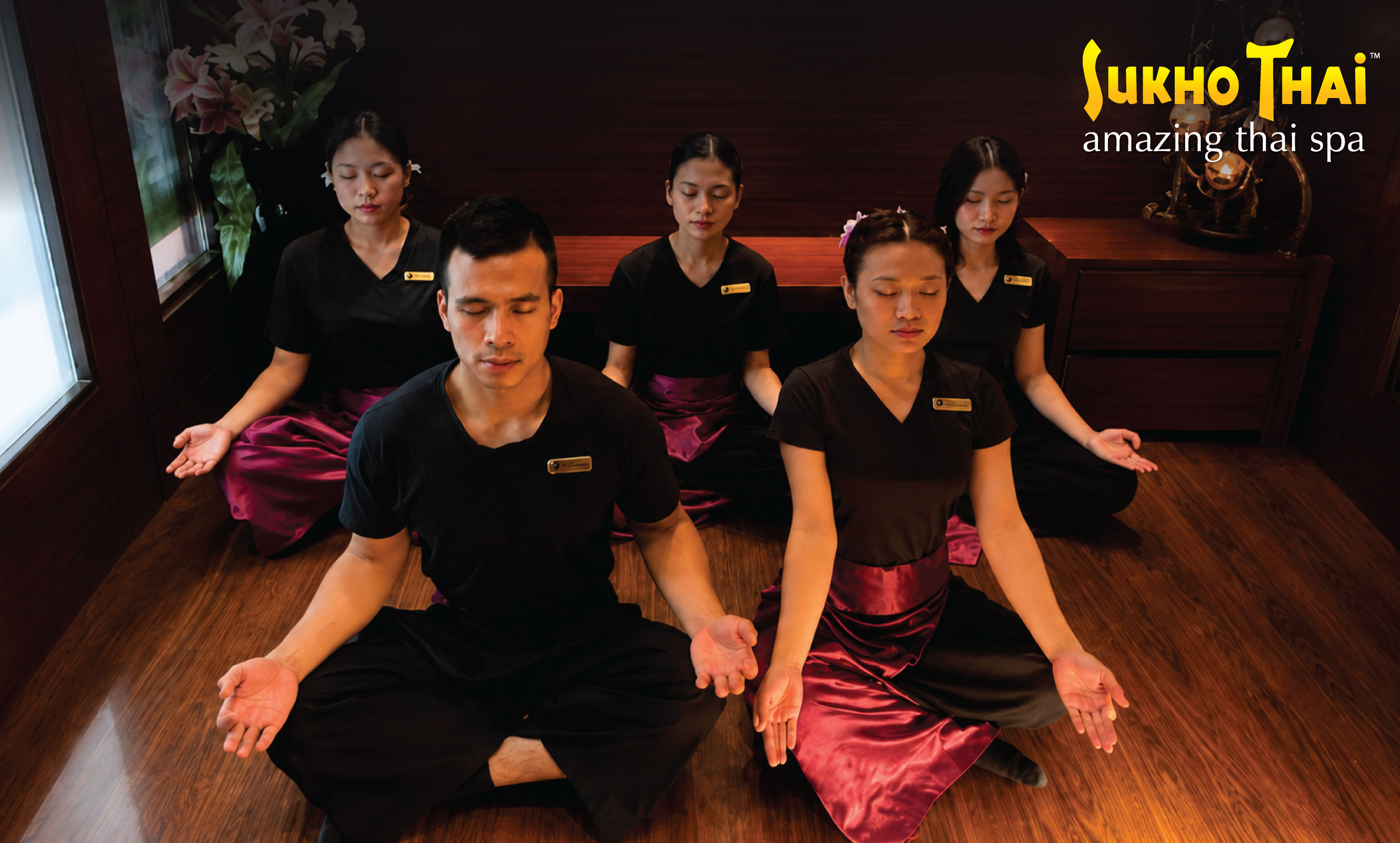
For those who practise yoga regularly, a Sukho Thai experience becomes a natural extension of that discipline. Where yoga lengthens and mobilises, therapeutic touch and traditional techniques work deeper easing the muscular tightness that stretching alone doesn't always reach, and supporting the kind of body recovery therapy that modern, high-stress lifestyles genuinely call for.
A thoughtfully designed wellness experience can support:
-
Deeper, more complete recovery and relaxation after physically or mentally demanding weeks
-
Improved circulation that complements the joint mobility built through yoga
-
A real sense of mind body balance, where calm isn't just felt in the moment, but carried forward
-
Restorative time that supports better sleep and steadier energy in the days that follow
In a world that constantly asks the body to keep going, Sukho Thai offers something increasingly rare: permission to stop, restore, and return to daily life genuinely replenished not just temporarily relaxed.
This International Yoga Day, the invitation is a simple one. Move with intention on the mat. Then give your body the deeper, dedicated recovery it has likely been asking for all along.
Frequently Asked Questions
Why is flexibility important?
Flexibility allows muscles to lengthen and joints to move through their natural range, which reduces stiffness, supports better posture, and lowers the risk of strain during everyday movements like bending, reaching, or twisting. Without regular flexibility work, muscles gradually tighten, making the body feel restricted even during simple daily tasks.
What is the difference between mobility and flexibility?
Flexibility is the passive ability of a muscle to stretch or lengthen, often with external assistance. Mobility is the active ability of a joint to move through its full range of motion under your own strength and control. In simple terms, flexibility is about how far you can stretch; mobility is about how well you can move. Both are necessary for a body that feels strong, capable, and pain-free.
Can yoga improve recovery?
Yes. Yoga supports recovery by activating the parasympathetic nervous system, which lowers stress hormones, slows the heart rate, and encourages the body's natural repair processes. Combined with proper sleep, hydration, and therapeutic care such as massage or spa-based recovery treatments, yoga can meaningfully speed up both physical and mental recovery.
How does yoga reduce stress?
Yoga reduces stress primarily through controlled breathing and mindful movement, both of which signal the nervous system to shift out of a heightened "fight or flight" state. This lowers cortisol levels over time, improves sleep quality, and creates a greater sense of calm that extends well beyond the time spent on the mat.
Why is recovery important for overall health?
Recovery is the stage where the body actually repairs and strengthens itself without it, muscle fatigue, chronic stress, and burnout accumulate over time. Prioritising recovery, whether through rest, mindful practices like yoga, or dedicated wellness therapies, supports better long-term physical health, mental clarity, and overall resilience against daily stressors.
Available at SukhoThai Locations across
Mumbai | Pune | Bangalore | Goa | Kashmir | Kathmandu
Call Now: +91 9870989740
Book Online at: SukhoThai Official Website
Popular Post
International Yoga Day: Why Flexibility, Mobility and Recovery Matter More Than Ever
Jun 21, 2026Copyrights © 2010 - 2026 SukhoThai India Pvt. Ltd. - All Rights Reserved